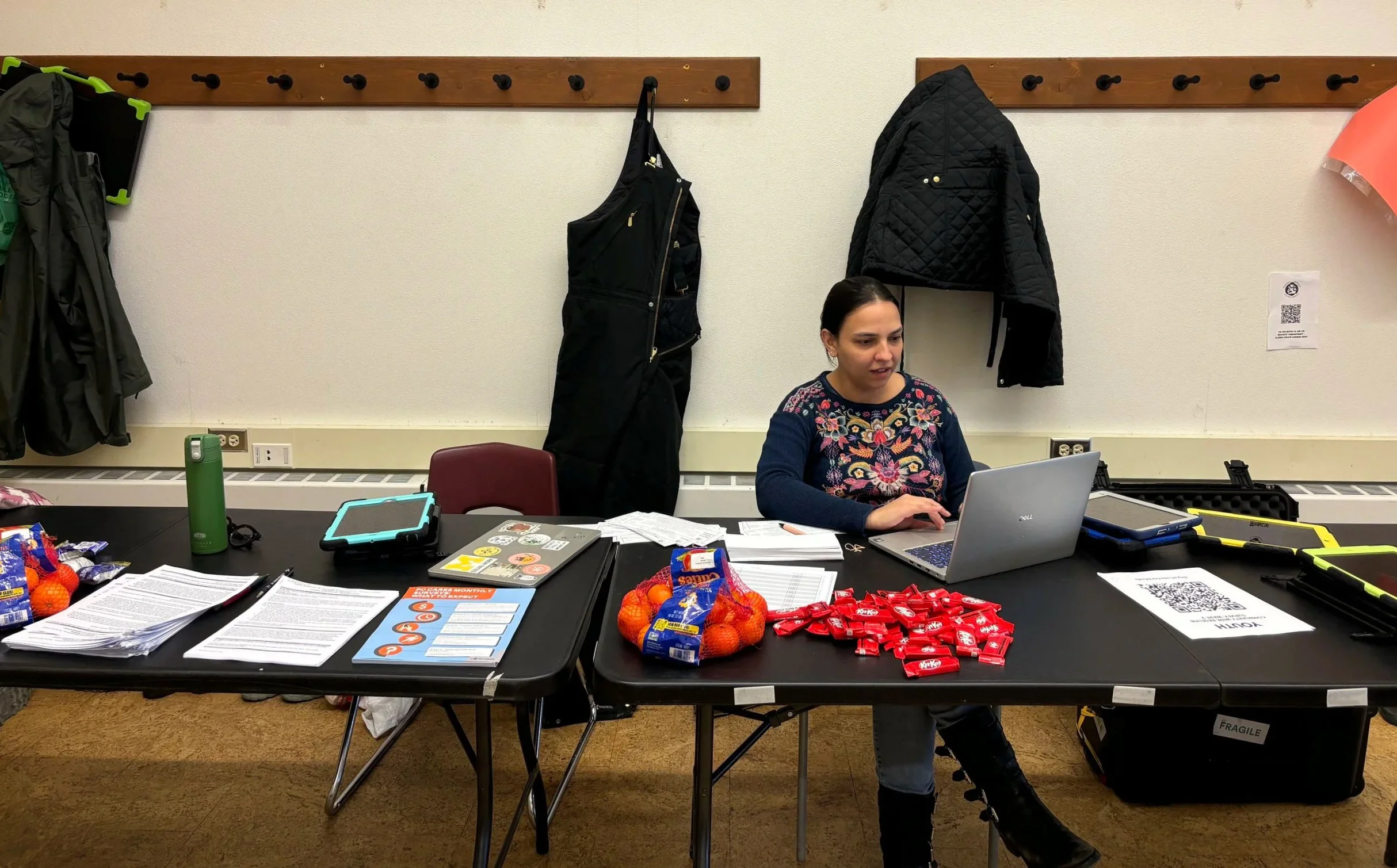
The next wave of IRINAH data collection has begun! PC CARES research staff traveled to four remote Alaskan villages over two weeks in October, enrolling over 300 adults and youth in the efficacy-implementation study of PC CARES. Recruitment exceeded overall goals for this wave of data collection.
We are working closely with the University of Alaska Kuskokwim Campus’ Rural Human Services (RHS) program to offer PC CARES learning circles. With each cohort of RHS students, who implement the program in their last year to fulfill their practicum requirement,
we collect surveys from PC CARES learning circle participants. For the current study, we also randomly select a small group of villages in which to collect data community-wide.
In the villages we visited, we invited adults 18 and older and youth aged 12-17 (with parent permission) to take a survey on their phone or an iPad we provide. We used a raffle-based referral system to encourage wider participation.
As always, doing work directly with communities taught us a lot. In some cases, filling out the surveys took longer than expected. Having access to Wi-Fi, distributing consent forms early, and finding translation support need early planning. We’re motivated to continue to improve our processes by coordinating logistics sooner, and in response to community feedback, we plan to offer five smaller raffle prizes for the youth (rather than three) to spread the awards more widely.
Next, we will send seven more surveys over the course of a year. These surveys will help us understand how suicide prevention knowledge, relationships, actions and experiences in the community are changing over time.
Special thanks to the tribes for supporting this research, local guides (including current and former RHS students), school staff, and other who made this data collection a success! You can read more about the experience from our staff in their own words…
Yasmine:
This month, I had the opportunity to travel to two Alaska villages for our data collection! I have been on the PC CARES team for nearly a year and a half, but this was my first time in Alaska and it was certainly a transformative experience. Though we had goals and a timeline, traveling in bush Alaska requires flexibility and adaptability.
Beyond giving out surveys, I built connections with wider community members by sitting together and listening to their stories. I'm carrying these stories and moments back with me to Michigan, and I'm excited to let them shape this meaningful, personal work.
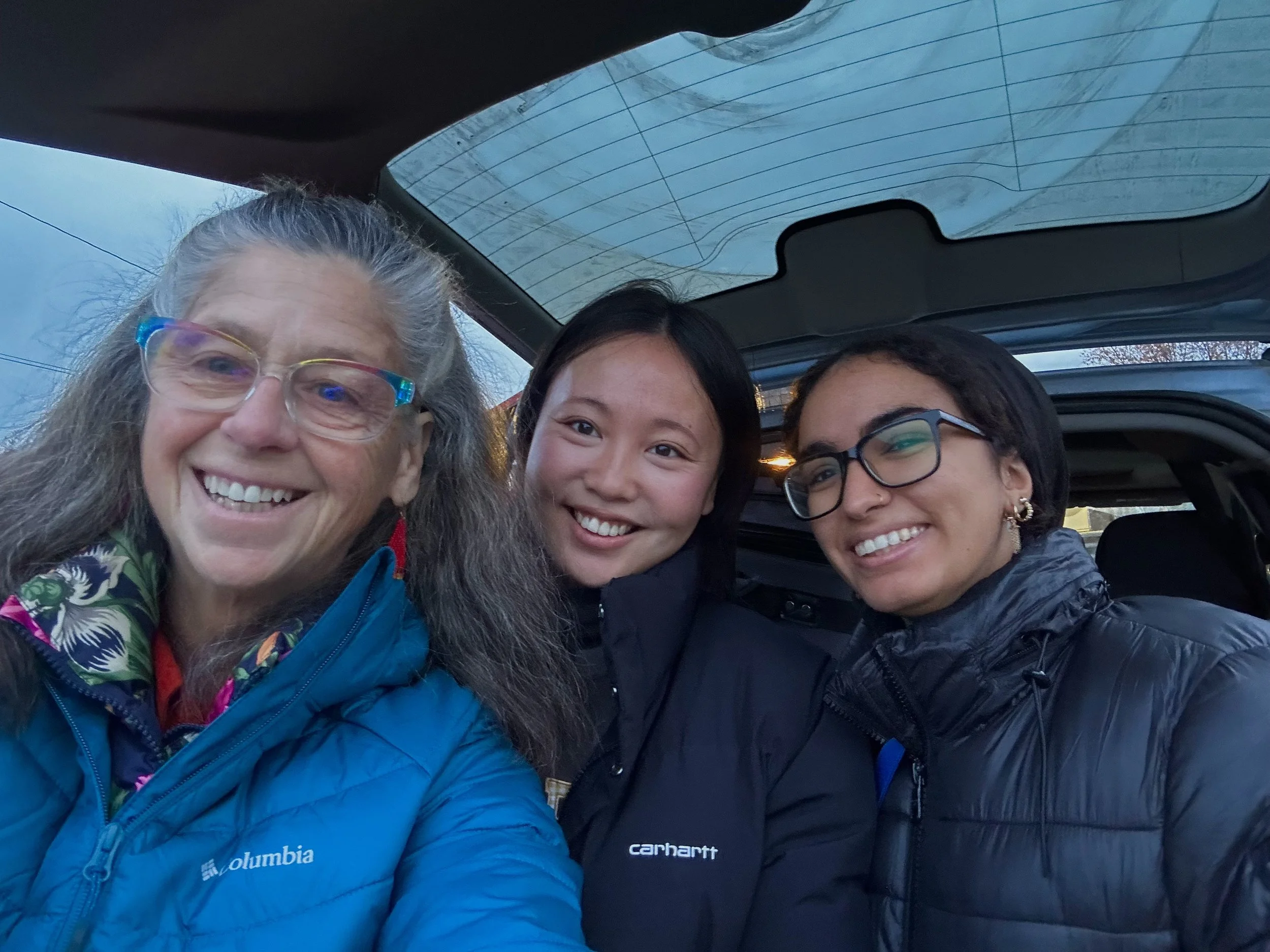
Diane, Angel, and Yasmine out for a dusky tundra walk between plane rides.
Manvinder:
When we entered the town of Bethel we were greeted by our gracious host and co-investigator on the project, Diane McEachern. She has been with the PC CARES program for many years and was helping us settle into the dorms before we flew out to our first village.
On the way to the airport the next morning, Diane pointed out some of the dead cars left abandoned around Bethel. She shared that once, as a hobby of sorts, she had taken it upon herself to count all the dead cars. As in much of bush Alaska, whatever is flown in rarely leaves, or it becomes an inconvenient problem to resolve. I thought about this framing of Bethel, and Alaska more broadly, as we set upon our data collection. How do people solve inconvenient problems?
When we landed in our first village, we turned our phones off airplane mode and realized we were not in reach of any cell service. We had been told to contact the village store once we landed so they could send someone to pick us up. My co-researcher, Miriam and I looked at each other, unsure how to coordinate with our contacts. Miriam explained our predicament to the pilot who handed his phone over to us. His phone was also not working.
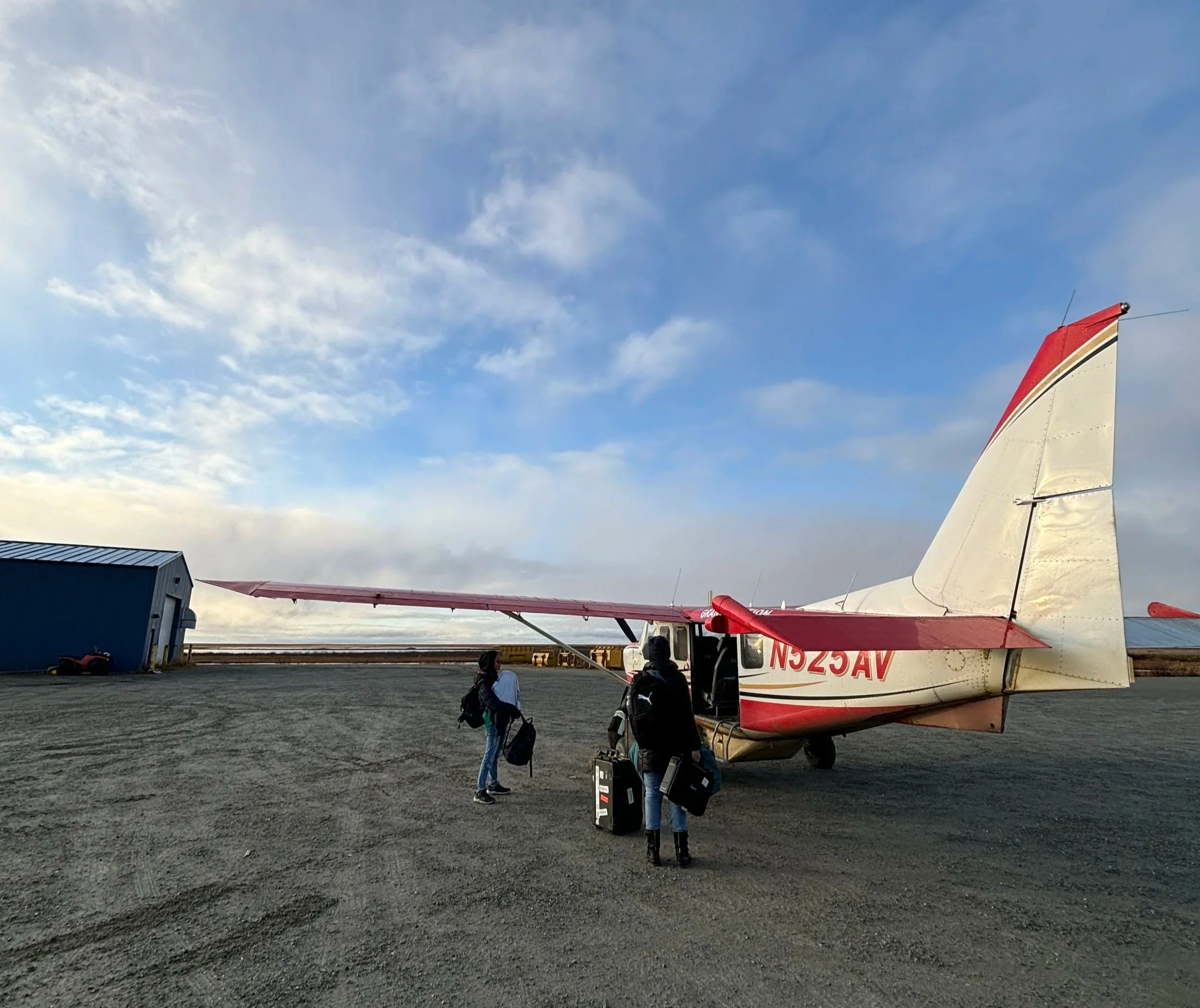
Loading up the plane for one of the villages in the Yukon-Kuskokwim region where we collected data.
A young man picking up supplies overheard our problem and called the village store without us even asking. When we looked over and realized what he had done, he shared that someone in a red truck would come over to grab us shortly and he rode back into town.
As the pilot prepared for his next flight, he looked over at us as we waited for our ride on the airstrip and said, “If all else fails, walk that way” as he pointed into the cold, open rural Alaskan roads.
As he took off, we waited with all of our belongings. Thankfully, after about ten minutes, a red truck pulled into the airstrip. Problem solved - not with a signal tower, but with trust and a neighborly gesture.
Our first two days of data collection were not as successful as we’d hoped. Alice, our liaison in the village, strolled into the room after a long day of work. We shared that we likely wouldn’t meet our goal.
Without hesitation, she began calling people she knew who were eligible for the survey. And when they came in to fill it out, she told them exactly who she thought they could recruit for our raffle. Within an hour, our numbers looked very different.
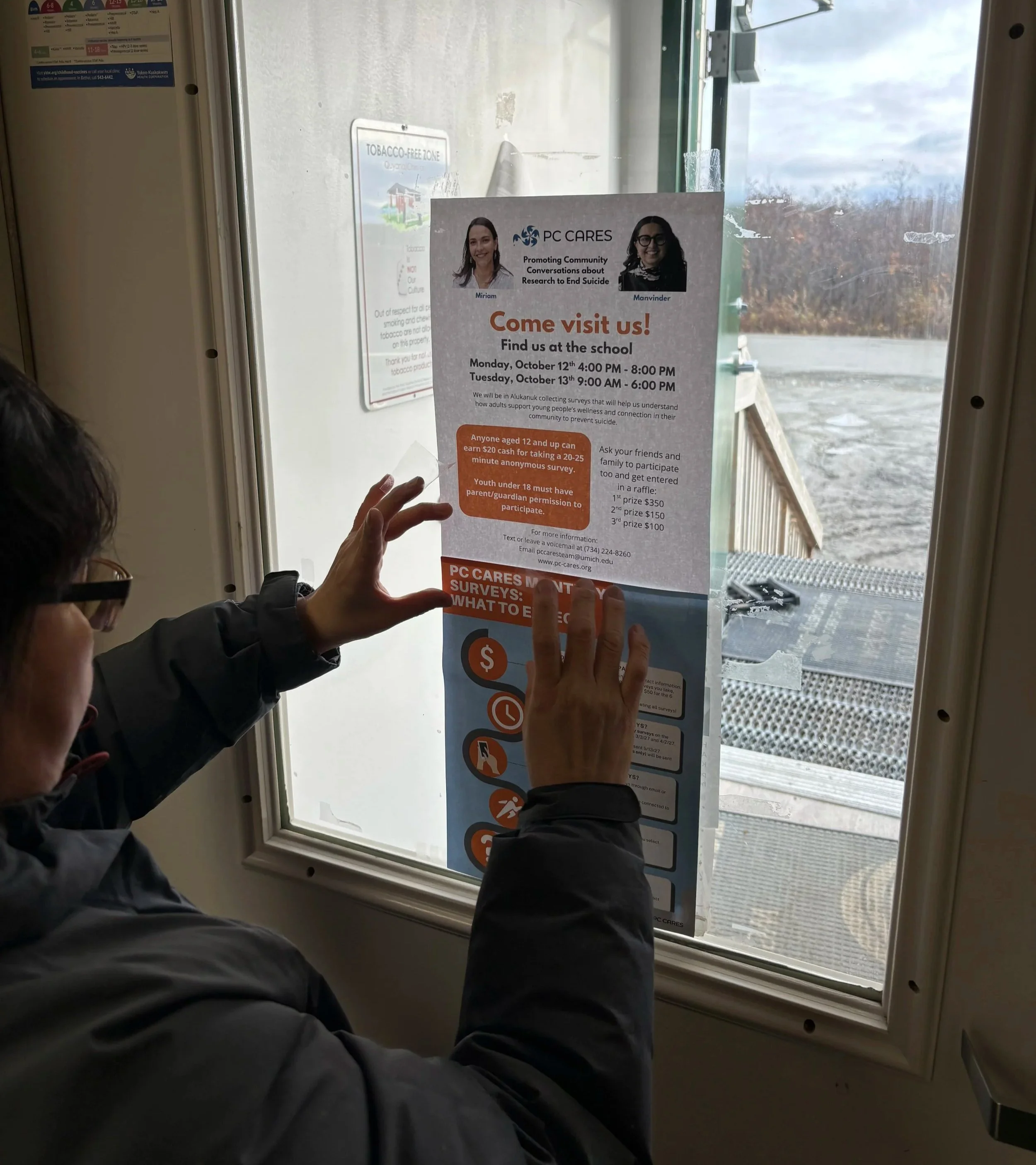
Hanging flyers to help spread the word about PC CARES surveys.
What we first saw as inconvenient problems that required rigorous planning turned out to be mundane matters solved in the moment by those around us, living in a close and connected network.
I am super grateful and excited to be reunited in the near future with all of the community members who were so incredibly gracious with their time and helpful to us as we navigated new terrain.
And unlike the dead cars, I flew out of Bethel later that week, but I knew I would be back!
The dead cars were never really the problem. They were a symptom of a place where things arrive and don’t leave, where solutions aren’t found in stores or systems but in people. The problems we faced—a missing phone signal, a recruitment goal slipping away—were solved through the generosity of the community. That’s what Alaska taught me: the most valuable resource isn’t what you bring with you but the community you know and the community that knows you.