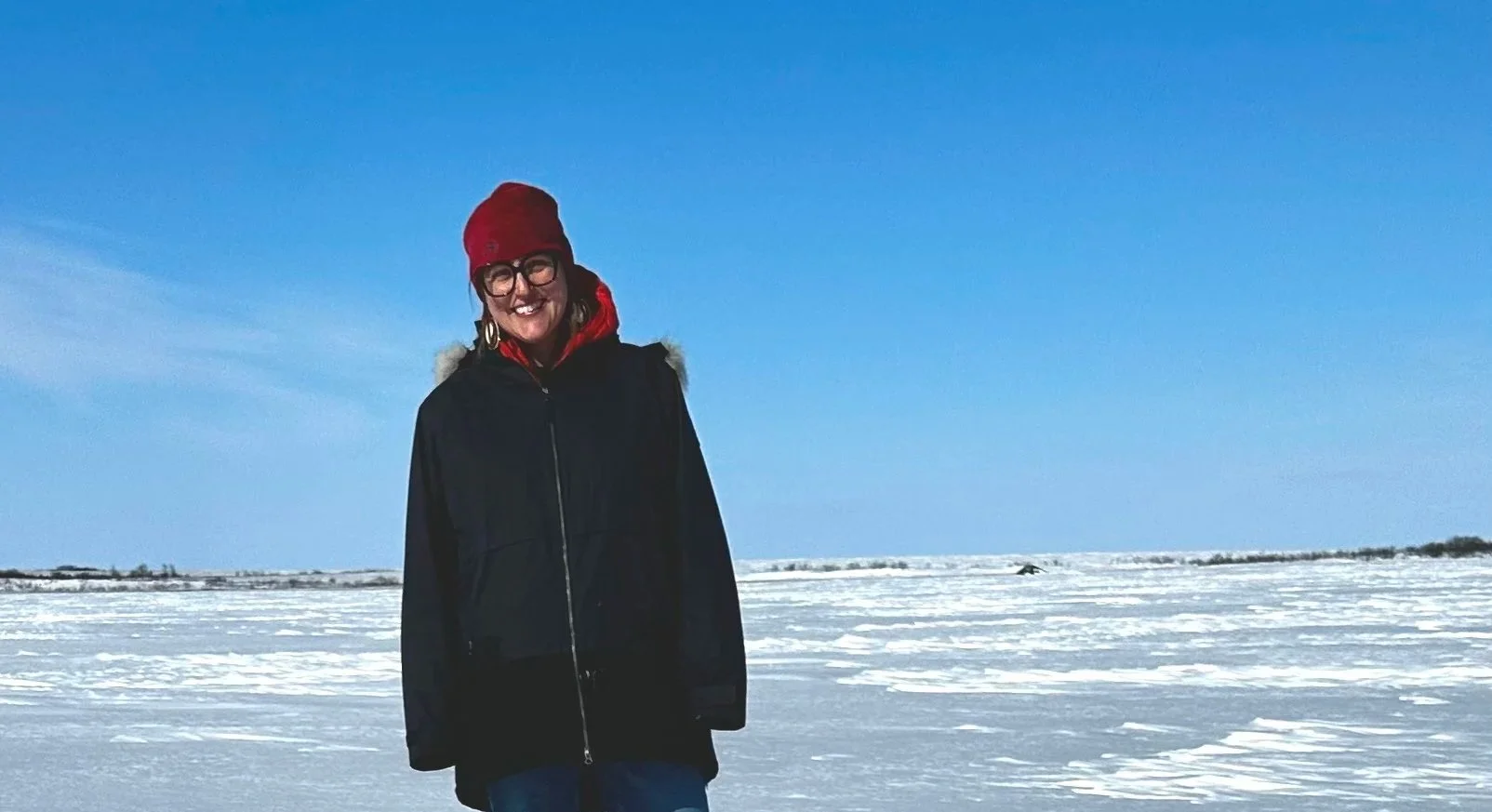
We are proud to spotlight the work and journey of Dr. Lauren Alaine White, a long-time team member and collaborator with PC CARES, now Assistant Professor of Social Work at the University of Washington in Seattle, WA.
Dr. Lauren A. White began her time with PC CARES as a graduate student mentee of Dr. Lisa Wexler. During her first summer with the team, she attended a week-long Training of Facilitators (ToF) in Anchorage, AK. There, Dr. White was able to interview students from the Rural Human Services (RHS) program at the University of Alaska-Fairbanks about why they chose to participate in the ToF and what they hoped to take back to their communities.
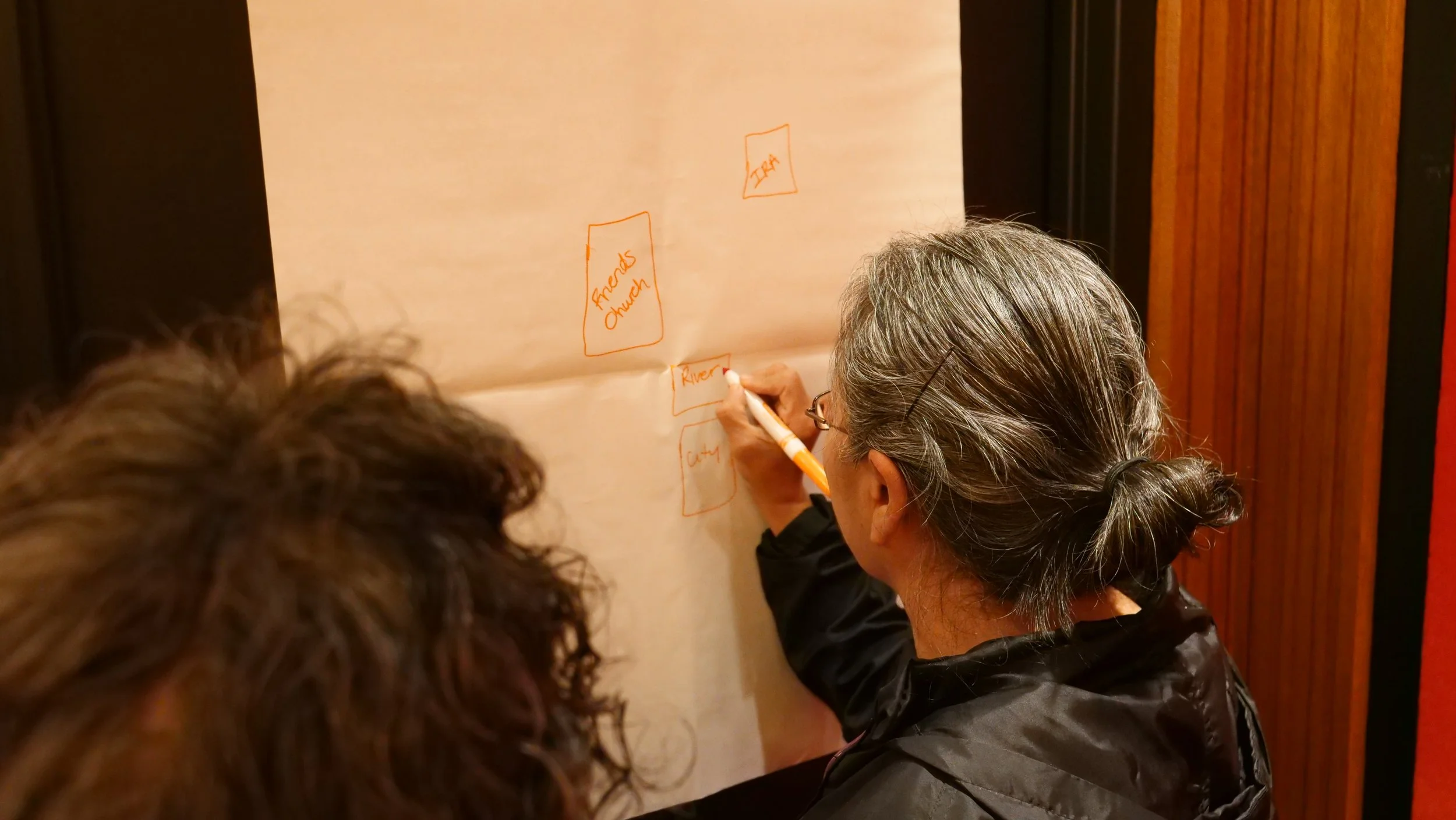
Participants brainstorm community strengths and resources at the 2019 Training of Facilitators.
“The things that they shared were inspiring to me. They are leaders in their communities, they're already doing a lot of amazing things, and are willing to step up,” said Dr. White. “I heard about how inspired they were by the training, and how it was giving them skills to enact change in their communities around topics that were really hard, really important, and really personal to them.”
After talking with the RHS students and listening to their stories, Dr. White felt affirmed in her purpose and role with PC CARES: one rooted in helping Native communities use their own expertise to address the issues most important to them.
“I became really committed to learning with the PC CARES team about what is working for those facilitators, and what we can do to increase support for them—especially the ways that the PC CARES program supports Indigenous leaders in enacting change in their own communities in a self-determined way,” shared Dr. White.
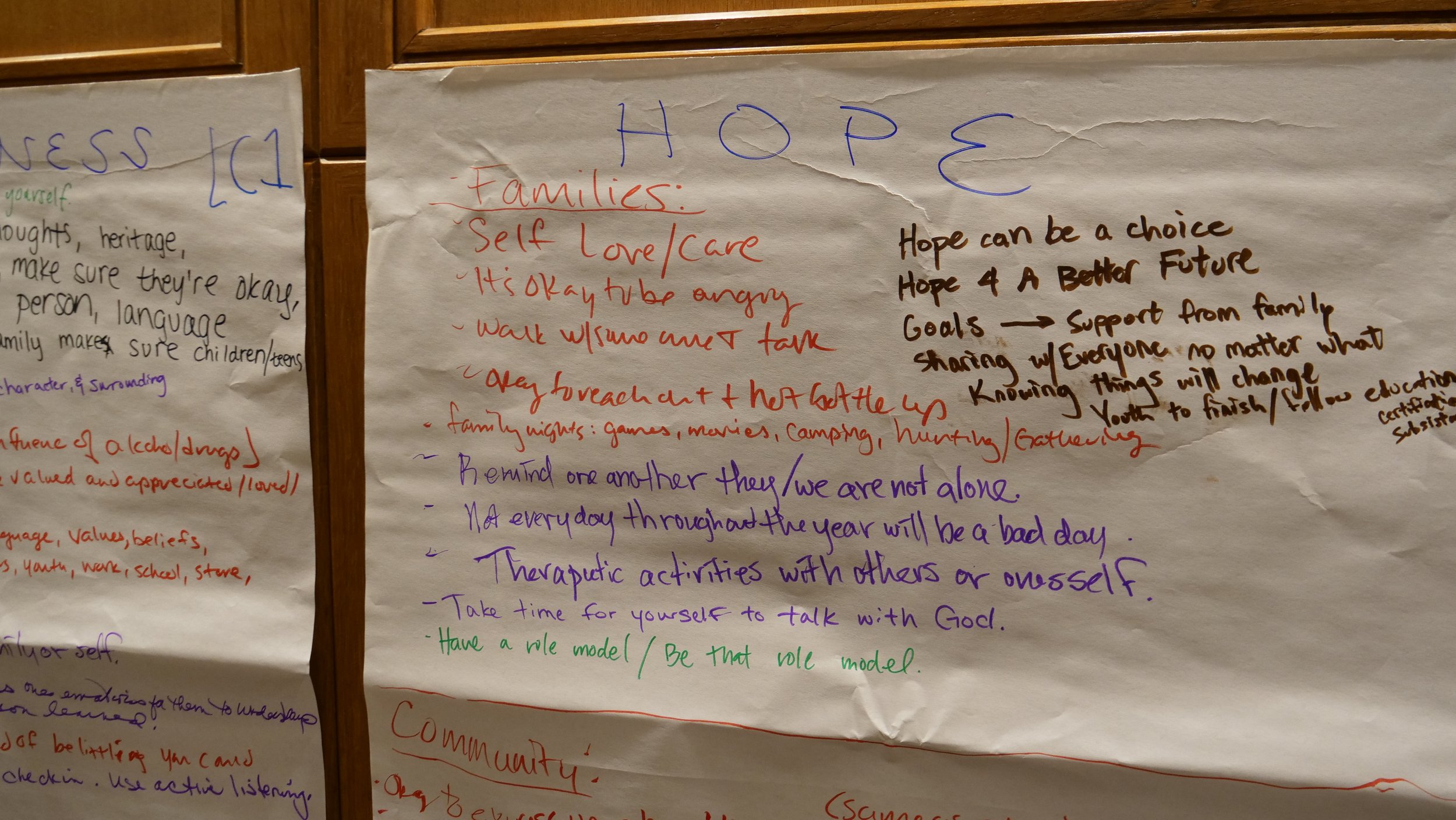
Participants’ thoughts on a flip chart paper about “What can families and institutions in our community do to support HOPE as young people grow up?” (2019 Training of Facilitators)
This early transformative experience became the foundation for her dissertation work, which involved three different projects united by a common, underlying theme: synthesizing community-based participatory research (CBPR) and implementation science to illuminate research pathways that truly center the needs and priorities of community partners. Bridging these methodological applications enabled Dr. White to notice gaps between the ways research has historically been done and the lived realities of community-based work:
“A key insight from doing that work was that it seems like the norms and the motivations behind how we do science actually drive a lack of attention to how we do our processes in CBPR. We're trained to prioritize effectiveness and efficacy results and we're trained to prioritize a demonstration of statistical rigor. But when you're developing interventions using CBPR, there's actually a whole other ecosystem of processes occurring that we need to learn from and know about.”
Addressing these gaps in ways that uplift the self-determination and leadership of Indigenous communities is what motivates Dr. White’s research agenda as an implementation scientist and community-engaged scholar:
“I’m all about Native people being scientists and learning things. There really is a science to getting things done and making things happen. I feel really passionate about, first of all, learning the unique ways that Tribal communities are already developing new ways to bring in these evidence-based tools or practices that are sometimes from the outside of our communities and second, being able to scale them so that Native people can learn from each other about what we’re doing and how we’re moving forward. Inter-tribal dialogue about what’s working in our communities: that’s really exciting to me.”
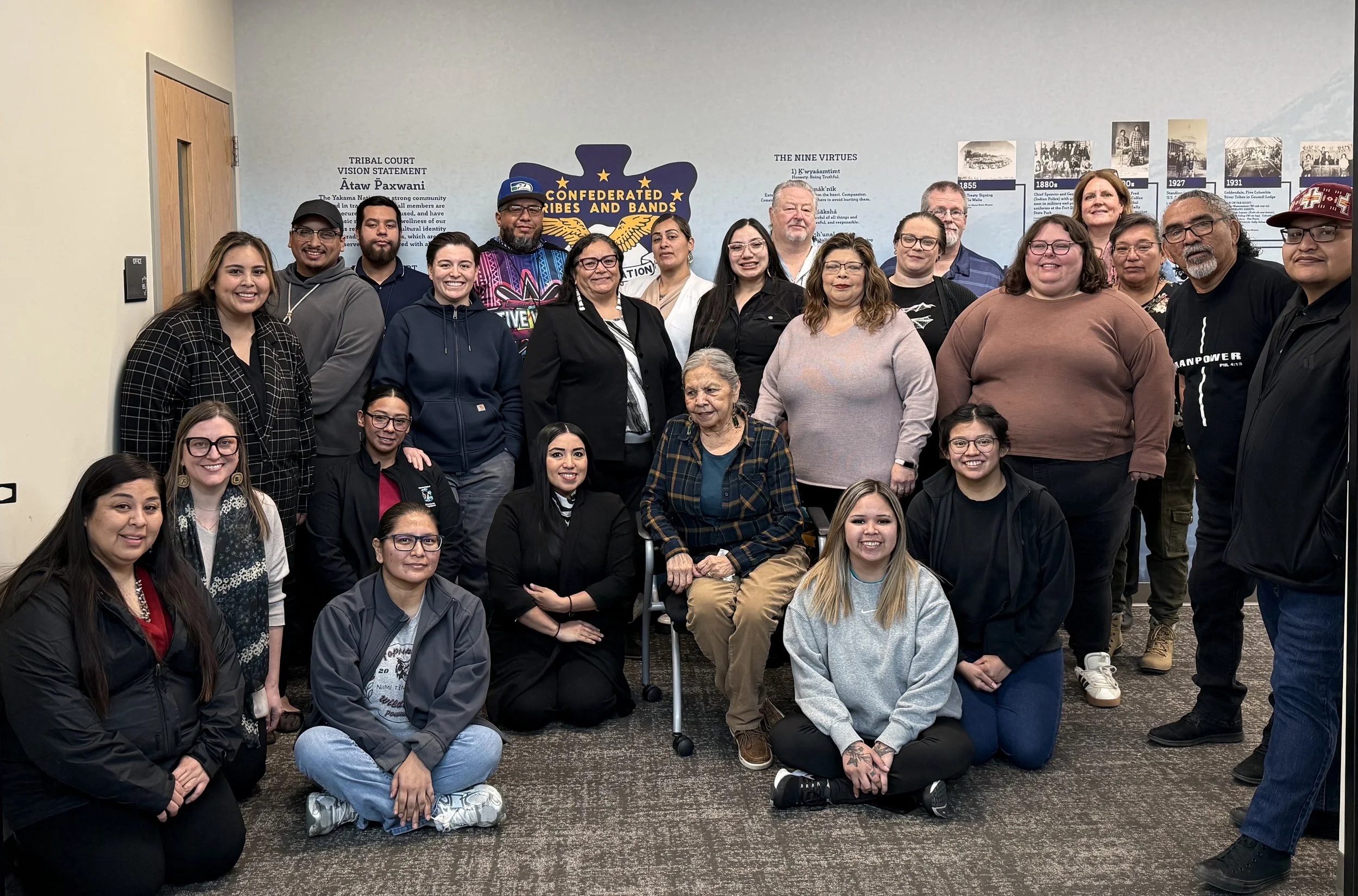
Dr. White (bottom row, second from L) with members of the Yakama Nation community advisory board, who are working together on a version of the PC CARES curriculum aimed at preventing overdose and reducing the harms of at-risk substance use.
Now, in the next stage of her career as an Assistant Professor, Dr. White has returned to the University of Washington—where she completed her Master of Public Health in 2019 under the guidance of her first mentors—and is enthused to be working alongside other junior faculty advancing health equity for Native people.
“It is a privilege, not just to have a position at the University of Washington, but to also have a network of other Native scholars who have similarly been mentored by Lisa [Wexler] and other people in Lisa’s generation who helped pave the way for new scholars in the science of Indigenous mental health and well-being. It's our responsibility to pick up the torch from them. Being in this position, I'm just one person in a whole cohort of people that are doing this kind of work,” said White.
In reflecting on her time with PC CARES so far, Dr. White highlighted a sense of deep gratitude for the people and the supportive environment that helped her grow as a researcher.
“As a graduate student, I benefited tremendously from over 20 years of work from people who invested their time and research efforts into pointing out how Indigenous culture is important and showing how practices like CBPR are critical for us to be able to develop interventions that will work in Tribal communities,” said Dr. White. “I was able to get my training spaces where being responsive to culture and leveraging community strengths were already normalized as important. This gave me a platform to have a wider lens of the field and bring in other ideas, like implementation frameworks.”
We are so excited to see what Dr. White continues to accomplish in the field of Native health research! You can read her most recent publication on patterns of social support in Alaska Native communities here.